
HOA Responsibility Water Leak : 7 Critical Things Every Homeowner and Property Manager Must Know Before It’s Too Late
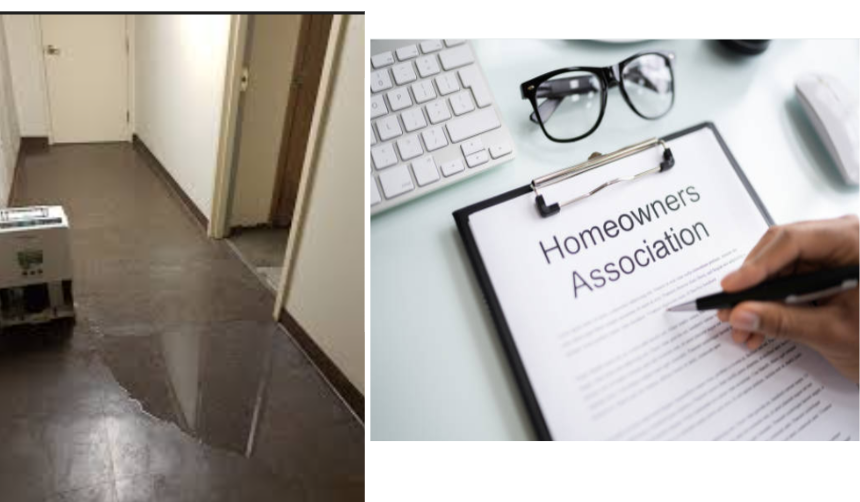
Table of Contents
HOA responsibility water leak: HOA responsibility for a water leak generally depends on where the leak originates. If the leak starts in a common area or shared plumbing, the HOA is typically responsible. If it starts inside a unit and only affects that unit, the individual owner is usually liable. However, when a leak crosses boundaries or causes damage in multiple units, responsibility becomes shared and heavily dependent on the specific language in your HOA’s governing documents.
Why Water Leaks in HOA Communities Are More Complicated Than You Think
A pipe bursts in the ceiling of Unit 204. Water pours down into Unit 104 below. The owner of 104 is furious. The owner of 204 says it wasn’t their fault. And the HOA board is caught in the middle of a dispute that nobody was prepared for.
Sound familiar? This scenario plays out in condominiums, townhomes, and multifamily communities across Texas every single day.
Water leaks in HOA properties are uniquely complex because the lines of ownership, responsibility, and liability are rarely where people assume they are. What you think is “your pipe” may technically be a shared structure. What looks like an HOA problem may actually fall on the individual unit owner.
And when no one takes clear responsibility quickly; water spreads, mold grows, and repair costs multiply.
This guide is designed to help homeowners, renters, HOA board members, and property managers understand exactly how responsibility is determined so you can act decisively, protect your property, and avoid costly disputes.
Understanding How HOA Governing Documents Define Responsibility
Before anything else, you need to understand that in HOA communities, responsibility is not determined by common sense alone; it’s determined by documentation.
Every HOA operates under a set of governing documents, typically including:
- CC&Rs (Covenants, Conditions, and Restrictions): The master rulebook that defines what the HOA owns, maintains, and is responsible for.
- Bylaws: Operational guidelines for how the HOA functions.
- Rules and Regulations: Additional community-specific policies.
These documents define the boundary between “common elements” (owned and maintained by the HOA) and “limited common elements” or “separate interests” (owned and maintained by individual unit owners).
The problem is; most homeowners never read these documents until there’s a crisis.
If you’re dealing with a water leak right now, your first step is to pull out your CC&Rs and find the section that defines maintenance responsibilities. Pay close attention to terms like “from the walls inward,” “paint and wallpaper,” or “original fixtures.” These phrases carry legal weight and directly affect who pays for what.

Common Areas vs. Individual Units: Who Owns What?
This is the foundational question in every HOA water leak dispute.
Common areas typically include:
- Exterior walls and roofing
- Shared plumbing systems and main supply lines
- Hallways, lobbies, elevators, and stairwells
- Swimming pools, clubhouses, and landscaped grounds
- Underground parking structures
Individual unit areas typically include:
- Interior walls, floors, and ceilings (from the surface inward)
- Plumbing fixtures like faucets, toilets, and water heaters within the unit
- Appliances such as dishwashers and washing machines
- Personal belongings and improvements made by the owner
Here’s where it gets tricky: the pipes that run through your walls may serve your unit exclusively, or they may serve multiple units and the building as a whole. That distinction matters enormously.
If a pipe serves only your unit, it’s typically your responsibility. If it serves the building, it’s typically the HOA’s. But again; your CC&Rs are the final authority, not general assumptions.
The 7 Key Scenarios That Determine HOA Responsibility for Water Leaks
Let’s walk through the most common situations and who is typically responsible in each.
Scenario 1: A Roof Leak Damages Your Unit
This is almost always HOA responsibility. The roof is a common element in virtually every HOA structure. If a poorly maintained roof allows water to penetrate and damage your ceiling, floors, or belongings, the HOA is responsible for the source (the roof) while the extent of coverage for interior damage may depend on your individual policy.
Scenario 2: A Burst Pipe Inside Your Unit
If the pipe is within your unit’s walls and serves only your unit, this typically falls on you as the owner. Your homeowner’s insurance (often called HO-6 for condo owners) should cover interior damage.
However; if the pipe was poorly maintained by the HOA or if it’s part of the building’s main plumbing system running through your unit, the picture changes. Document everything and contact your HOA in writing immediately.
Scenario 3: A Neighbor’s Leak Damages Your Unit
This is one of the most contentious scenarios. If water from Unit 302 leaks into your Unit 202 ceiling, the liability chain goes like this:
The owner of 302 may be responsible if the source was a fixture or appliance they own. The HOA may be responsible if the source was shared infrastructure. Your own insurance may need to respond first while the dispute is sorted out.
Understanding your insurance claim process ahead of time can save you enormous stress in this situation.
Scenario 4: A Main Water Line Break
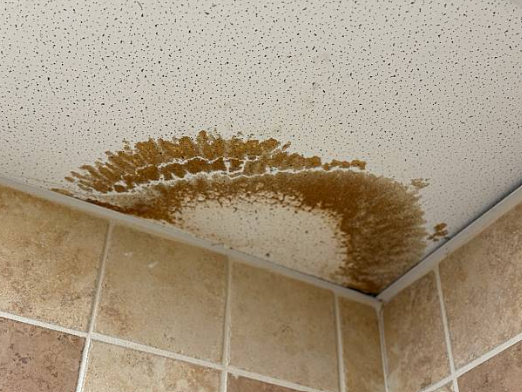
Main supply lines that serve the entire building are almost universally the HOA’s responsibility to maintain and repair. If a main line breaks and causes widespread flooding, the HOA should respond and coordinate professional water damage restoration.
If your HOA is slow to act, document every delay in writing. This documentation protects you if you need to pursue damages later.
Scenario 5: A Washing Machine or Dishwasher Leak
Appliance leaks within your unit are almost always your responsibility. If your washing machine hose fails and floods your unit and the one below, you as the unit owner are typically liable for both.
This is why reviewing your HO-6 policy limits and ensuring you have adequate personal liability coverage is so important before an incident occurs.
Scenario 6: HVAC or Water Heater Failure
If the unit’s HVAC system or water heater is owned and maintained by the individual unit owner (which is common), any resulting water damage is the owner’s responsibility. If the HVAC is a shared system managed by the HOA, responsibility shifts.
Scenario 7: Flooding from a Natural Disaster or Storm
Storm-related flooding that enters through the building envelope (roof, windows, exterior walls) typically becomes an HOA insurance matter. However, individual unit owners may still need their own policies to cover personal property and interior finishes.
Explore how flood damage restoration differs from standard water damage cleanup, especially in multi-unit scenarios.
What Happens When a Leak Crosses Unit Boundaries?
This is where most disputes escalate.
When water originates in one unit and damages another, three parties may be involved simultaneously: the unit where the leak started, the unit that suffered the damage, and the HOA. Each has a role, and each has insurance that may need to respond.
Here’s a practical approach when this happens:
Step 1: Stop the water source immediately. If you can’t locate a shutoff, contact your property manager.
Step 2: Document all visible damage with photos and video before any cleanup begins.
Step 3: Notify your HOA in writing within 24 hours. Most governing documents require prompt written notice.
Step 4: Contact your own insurance carrier and report the incident; even if you don’t think you’re at fault. Let your carrier investigate.
Step 5: Engage a certified restoration company immediately to begin water extraction and drying. Delays increase damage and reduce your negotiating position.
The residential water damage restoration guide provides a deeper look at what happens during the recovery process from a property owner’s perspective.
How Insurance Works in HOA Water Damage Situations
Insurance in an HOA community works in layers, and understanding those layers can prevent you from paying out of pocket for damage you’re already covered for.
The HOA’s master policy covers common areas and the building structure. There are two types:
- Bare walls-in: Covers only the structure; you’re responsible for everything inside your unit including fixtures and flooring.
- All-in (all-inclusive): Covers structure AND original fixtures, appliances, and flooring; but not your personal improvements or belongings.
Your HO-6 policy covers your personal property, interior improvements, and additional living expenses if you’re displaced. It also includes personal liability coverage if your unit is the source of a leak that damages a neighbor.
The key gap: Many condo owners carry HO-6 policies with limits that don’t reflect the true cost of restoration. Review your policy annually and consider loss assessment coverage, which pays for your share of costs when the HOA’s master policy deductible is triggered.
If you’re unsure how to file or maximize your claim, Prime Time Restoration’s team offers dedicated insurance claim assistance in Houston, Dallas, Canyon Lake, and across the entire service area; walking property owners through every step of the claims process.
Steps to Take Immediately After Discovering a Water Leak in an HOA Property
When water is actively spreading, every minute matters. Here’s what to do:
1. Stop the source. Locate the shutoff valve for your unit and turn it off. If you can’t find it, call your property manager immediately.
2. Don’t wait. Water spreads rapidly through porous materials. Even a short delay dramatically increases repair costs.
3. Document everything. Take photos and videos of all affected areas before touching anything. This is your most important protection.
4. Notify the HOA in writing. Email or text creates a timestamp record. Follow up with a phone call.
5. Call a restoration professional. Don’t attempt to dry the property yourself with fans and towels. Hidden moisture requires professional equipment and monitoring.
6. Contact your insurance. Report the incident promptly. Delays in reporting can complicate your claim.
The first 60 minutes after discovering water damage are the most critical. Learn more about what to do in the first 60 minutes after a pipe break to make sure you’re prepared.

When to Call a Professional Restoration Company
Some homeowners and property managers try to handle water damage cleanup themselves to save money. This almost always costs more in the long run.
Here’s why professional intervention matters:
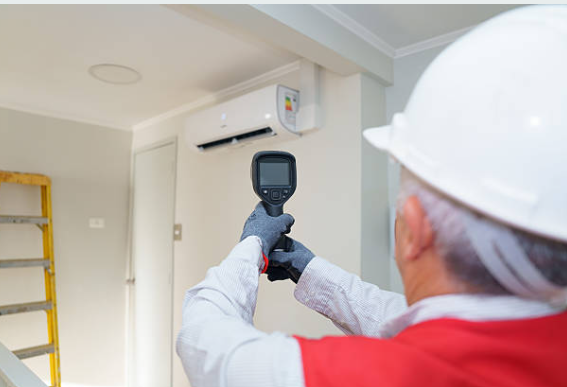
- Professionals use moisture meters and thermal cameras to find water that’s invisible to the naked eye
- Industrial drying equipment works dramatically faster than household fans
- Antimicrobial treatment prevents mold, which starts forming within 24 to 48 hours
- Professional documentation supports insurance claims and protects you legally
For HOA communities managing multiple units or large common areas, the scale of damage can escalate quickly. Prime Time Restoration works directly with property managers, HOA boards, and commercial property owners to coordinate fast, comprehensive responses.
Whether it’s a single unit, an entire floor, or a multi-building complex; the team is equipped for it. Explore more on commercial water damage restoration and property restoration services for owners.
Serving HOA Communities Across San Antonio and Beyond
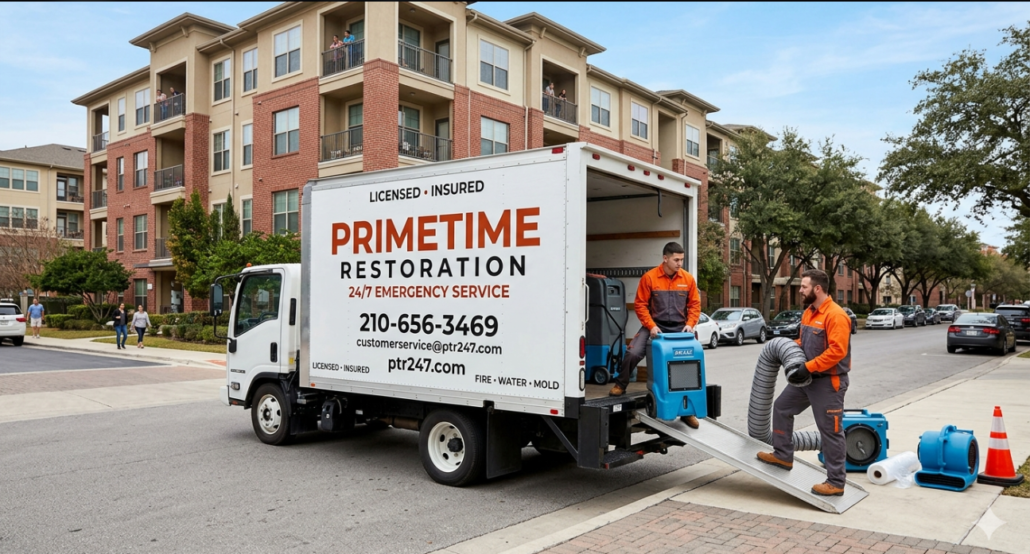
Prime Time Restoration serves HOA communities, property managers, apartment complexes, multifamily units, hospitals, and hotels across a wide footprint including San Antonio, Austin, Boerne, Buda, Canyon Lake, Cibolo, Converse, Dallas, Fair Oaks Ranch, Hondo, Houston, Kyle, Live Oak, Leon Valley, New Braunfels, San Marcos, Schertz, Seguin, Selma, Spring Branch, Timberwood Park, and Universal City.
With a 90-minute response time and 24/7 emergency services, Prime Time is equipped to respond when the call comes; day, night, or holiday.
Follow Prime Time on Instagram, Facebook, and LinkedIn for restoration education, community updates, and real project case studies.
Address: 11495 Topperwein Road, San Antonio, TX 78233
Conclusion
HOA water leak disputes are stressful, financially significant, and deeply personal. Your home, your investment, and your sense of security are all on the line.
But here’s the truth: the property owners and HOA boards who come out of water leak situations with the least damage; financially and structurally; are the ones who understood their responsibilities before the emergency happened.
Don’t wait for a burst pipe or a leaking roof to figure out where your CC&Rs draw the line. Read your governing documents now. Review your HO-6 policy. Know your shutoff valve locations. And keep the number of a certified, responsive restoration company on hand.
Because when water starts moving through your building; every second you spend figuring out who’s responsible is a second water spends destroying your property.
The time to prepare is before the water rises. Call Prime Time Restoration at 210-656-3469 and protect your property before the next emergency finds you.