
7 Urgent Truths About Asbestos Removal Leon Valley TX That Could Save Your Family’s Life
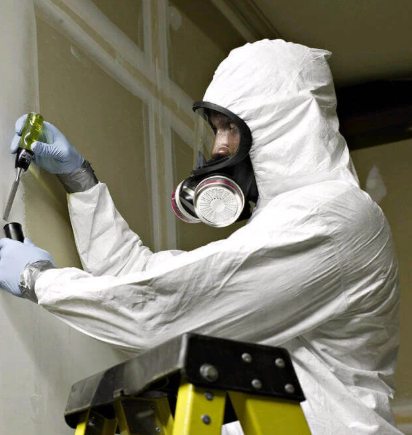
Table of Contents
Asbestos removal Leon Valley TX is the professional process of identifying, containing, and safely disposing of asbestos-containing materials (ACMs) found in older homes and commercial buildings. Asbestos is a naturally occurring mineral fiber that was widely used in building materials before the 1980s. When disturbed, it releases microscopic fibers into the air that, when inhaled, can cause life-threatening diseases including mesothelioma and lung cancer. In Leon Valley and the greater San Antonio area, many pre-1980s structures still contain asbestos in insulation, floor tiles, roofing, and textured ceilings. Professional remediation is not optional ; it is a legal and health necessity.
What Is Asbestos and Why Is It Still a Problem in Leon Valley TX?
Here is a fact that surprises most homeowners: asbestos was not fully banned in the United States. It was only heavily restricted.
The Environmental Protection Agency (EPA) began regulating asbestos use in the early 1970s, but many products containing it continued to be manufactured and installed well into the late 1980s. That means any home or commercial building constructed before 1990 in Leon Valley, San Antonio, or anywhere across Texas has a reasonable chance of containing asbestos-based materials somewhere in its structure.
Leon Valley is a city with deep roots. Many of its residential and commercial properties date back several decades. That history is part of what makes it charming ; and it is also part of what makes asbestos removal Leon Valley TX such an important conversation to have.
The danger is not in the material simply existing. The danger is in disturbing it. When asbestos-containing materials are cut, drilled, broken, sanded, or demolished without proper containment, microscopic fibers become airborne. Those fibers are invisible to the naked eye, odorless, and tasteless. You would never know you inhaled them ; until it is too late.
Where Is Asbestos Commonly Found in Older Homes?
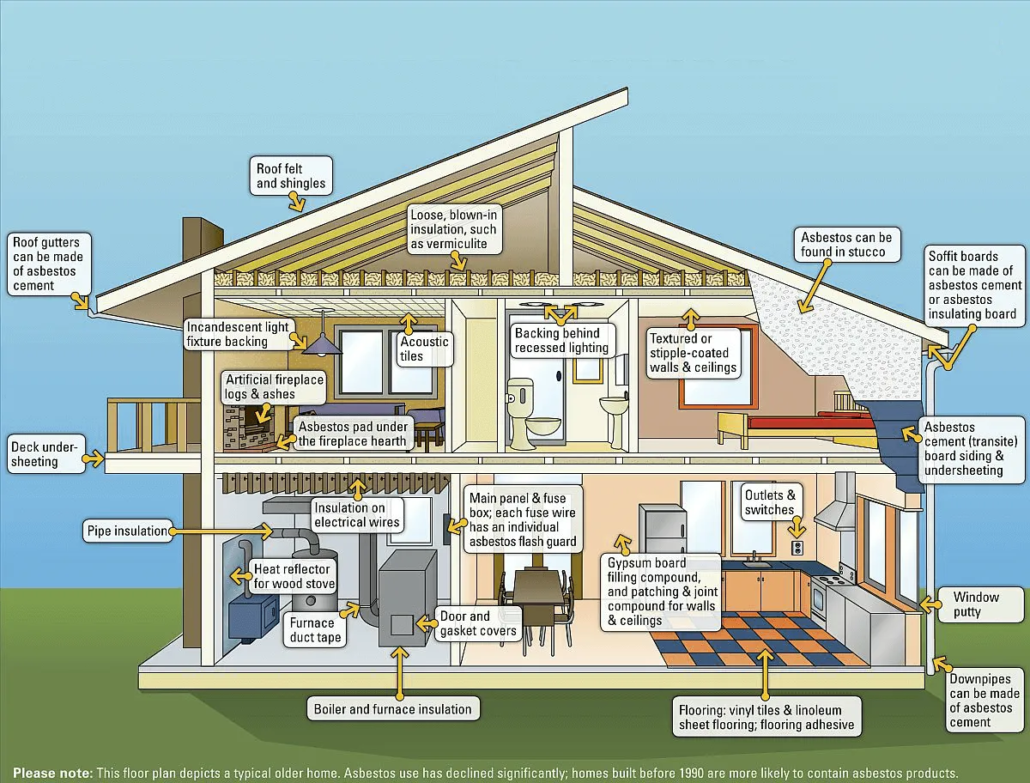
Many homeowners are shocked to learn how many products once contained asbestos. It was prized by builders for its heat resistance, durability, and affordability. Here is where it tends to hide in older properties across Leon Valley and surrounding Texas communities:
Ceiling Tiles and Textured Ceilings That cottage cheese or “popcorn” ceiling texture that was popular from the 1950s through the 1980s? It frequently contained asbestos. Any renovation work on those ceilings without proper testing first is a serious risk.
Floor Tiles and Adhesives Nine-inch and twelve-inch vinyl floor tiles, particularly in kitchens and bathrooms of older homes, commonly contained asbestos fibers. Even the black mastic adhesive used to bond them to the subfloor can be a source of contamination.
Pipe and Duct Insulation Asbestos was used heavily to wrap steam pipes, boilers, and HVAC ductwork in older homes and commercial buildings. Deteriorating pipe insulation is one of the most dangerous forms of asbestos exposure because it is often in crawl spaces and basements where it goes unnoticed for years.
Roofing and Siding Asbestos cement roofing shingles and siding panels were popular in mid-century construction. As long as they remain intact, they pose minimal risk. But the moment they begin cracking, weathering, or you plan to replace them, professional handling becomes essential.
Attic Insulation Vermiculite insulation, a material commonly added to attics before the 1990s, was frequently contaminated with asbestos from a mine in Libby, Montana that supplied much of the country’s vermiculite supply.
Textured Wall Products and Joint Compounds Some drywall joint compounds and textured wall paints manufactured before 1977 contained asbestos fibers.
If you are planning a renovation, doing any demolition work, or simply curious about an older home’s safety, do not guess. Get a professional inspection.
The Health Risks You Cannot Afford to Ignore
This section matters more than any other in this article.
Asbestos-related diseases do not show up overnight. That is what makes them so devastating. The latency period, meaning the time between asbestos exposure and the onset of disease, can range anywhere from 10 to 50 years. People who were exposed in the 1970s and 1980s are being diagnosed today.
Here are the primary health conditions associated with asbestos exposure:
Mesothelioma This is a rare and aggressive cancer that affects the lining of the lungs, abdomen, or heart. It is almost exclusively caused by asbestos exposure. By the time it is diagnosed, it is often in an advanced stage because symptoms mimic other common conditions.
Asbestosis A chronic, non-cancerous respiratory disease caused by inhaling asbestos fibers. Over time, scar tissue forms in the lungs, making it increasingly difficult to breathe. There is no cure ; only symptom management.
Lung Cancer Exposure to asbestos significantly increases the risk of developing lung cancer, especially in combination with smoking. The two risk factors together are far more dangerous than either alone.
Pleural Disease Non-cancerous changes to the lining of the lungs, including thickening and the formation of plaques, can result from asbestos exposure. While not immediately fatal, these conditions can severely limit breathing capacity and quality of life.
The CDC and the World Health Organization both classify asbestos as a Group 1 carcinogen ; meaning there is sufficient evidence that it causes cancer in humans. There is no safe level of exposure.
What Triggers an Asbestos Inspection?
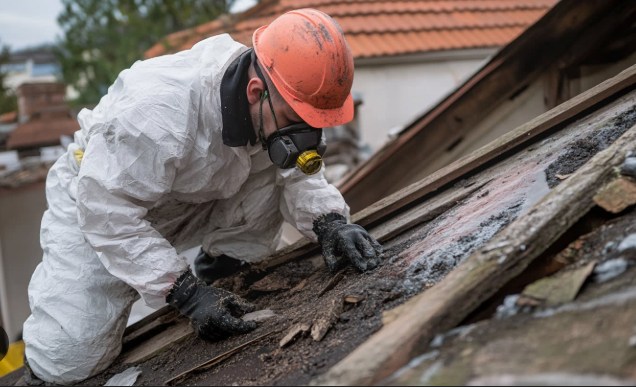
You do not have to wait for a renovation to get an asbestos inspection. Here are the most common scenarios that should prompt immediate professional assessment:
Pre-Renovation or Demolition Work Any time you are planning to disturb building materials in a pre-1990s structure, an inspection is not just smart ; it is required by Texas Department of State Health Services (DSHS) regulations for commercial structures and strongly recommended for residential properties.
Buying or Selling an Older Home Buyers in Leon Valley and surrounding areas like Universal City, Live Oak, and Converse should consider asbestos testing as part of their due diligence before closing on any older property.
Visible Deterioration of Building Materials If you notice crumbling ceiling tiles, damaged pipe insulation, or deteriorating floor tiles in a home built before 1990, do not touch them. Have them tested immediately.
After a Disaster If your property has experienced fire, water damage, or a severe storm, materials that were previously intact may now be disturbed. This is especially critical because disaster remediation work often involves tearing into walls and ceilings. For properties that have experienced fire or flood damage, professional environmental hazard assessment should always accompany disaster restoration work.
You can learn more about how environmental hazard remediation fits into a broader restoration plan by reading about Prime Time’s remediation vs. restoration services.
The Asbestos Removal Process Explained Step by Step
Professional asbestos removal Leon Valley TX follows a structured, regulated process. Here is what a licensed abatement company should do:
Step 1: Initial Assessment and Testing A certified asbestos inspector collects bulk samples of suspected materials and sends them to an accredited laboratory. Results typically come back within 24 to 72 hours. This step should never be skipped.
Step 2: Abatement Planning Based on the lab results, the contractor develops a detailed plan that identifies the scope of removal, the methods to be used, containment strategies, and disposal protocols.
Step 3: Containment and Preparation Before any removal begins, the work area is sealed off using heavy-duty polyethylene sheeting. Air filtration units with HEPA filters are set up to maintain negative air pressure inside the containment zone ; preventing any fibers from escaping to other parts of the building.
Step 4: Removal Workers in full personal protective equipment, including respirators and disposable coveralls, carefully remove the asbestos-containing materials. Wet methods are often used to prevent fiber release during the removal process.
Step 5: Disposal All asbestos waste must be double-bagged in clearly labeled, leak-tight disposal bags and transported to an approved hazardous waste disposal facility. Texas DSHS has strict requirements about how asbestos waste is handled and tracked.
Step 6: Air Clearance Testing After removal, an independent air quality test is conducted to confirm that fiber levels in the space meet EPA and OSHA safety standards before the area is cleared for re-occupancy.
Step 7: Final Documentation A licensed contractor will provide you with all documentation, including lab results, disposal manifests, and clearance test results. Keep these records ; they will matter if you ever sell the property.
For a broader look at how Prime Time approaches environmental hazard remediation as part of its services, explore the full scope of what professional water and environmental remediation includes.
How Much Does Asbestos Removal Cost in Leon Valley TX?

Cost is one of the first questions homeowners ask, and it is a fair one. Here is a realistic breakdown:
Inspection and Testing: Typically between $200 and $800 depending on the size of the property and number of samples collected.
Removal of Popcorn Ceilings: Ranges from $1 to $3 per square foot on average for residential spaces.
Floor Tile Removal: Generally between $5 and $15 per square foot depending on access and extent.
Pipe Insulation Removal: Often quoted by linear foot, typically between $10 and $25 per linear foot.
Full Home Abatement: Larger projects can range from $2,000 to $30,000 or more depending on the scope.
It is worth noting that many homeowners’ insurance policies cover asbestos removal when it is connected to a covered claim event such as fire or water damage. If you are navigating an insurance claim alongside an environmental hazard situation, working with a restoration company that also provides insurance claim assistance can simplify the process significantly.
Do not choose a contractor based on price alone. Improper asbestos removal can expose your family to greater risk than if the material had been left alone.
How to Choose the Right Asbestos Removal Company

Not every contractor is qualified to handle asbestos abatement. Here is what to look for:
Texas DSHS Licensing In Texas, all asbestos abatement contractors must be licensed by the Department of State Health Services. Always ask for and verify their license number before hiring.
Proper Insurance The contractor should carry general liability insurance as well as pollution liability insurance. This protects you if anything goes wrong during the abatement process.
Third-Party Air Clearance Testing A trustworthy contractor will not perform their own clearance testing. They will bring in an independent Certified Industrial Hygienist (CIH) to verify that the air is safe after removal is complete.
Clear Documentation Ask for sample lab reports, waste disposal manifests, and clearance certifications from previous jobs. A legitimate contractor will not hesitate to provide references.
Experience with Residential and Commercial Properties Whether you own a single-family home in Leon Valley or manage a multifamily apartment complex or commercial property, make sure the company has proven experience in your property type.
Prime Time Restoration serves a wide range of clients across Leon Valley, San Antonio, and surrounding communities ; from hotels and hospitality facilities to apartment complexes and hospitals. Our team is equipped to handle environmental hazard remediation alongside water, fire, and mold restoration services, giving you one trusted point of contact for complex restoration situations.
For more information or to schedule an assessment, reach out directly:
Prime Time Restoration 11495 Topperwein Road, San Antonio, TX 78233
Connect with us on Instagram, Facebook, and LinkedIn.
Conclusion
Asbestos removal Leon Valley TX is not a DIY project. It is not something to delay. And it is certainly not something to hand off to the lowest bidder without doing your homework.
If your home or building was constructed before 1990, the possibility of asbestos-containing materials is real. And if you are planning any renovation, remodel, or restoration work, a professional inspection is the single most responsible step you can take before anyone picks up a tool.
The good news is that asbestos, when properly identified, contained, and removed by a licensed professional, does not have to be a permanent threat. Thousands of homes across Texas have been safely remediated and returned to healthy, livable spaces for families.
Knowledge is your first line of defense. Now that you have it, what is stopping you from finding out whether your home is safe?